What to Do After Matric in South Africa (2027): Options If You Passed, Failed or Didn’t Get In

Whether you pass with flying colours, scrape through, fail a subject or don’t get the place you wanted, you have options in 2027. This guide covers when the 2026 matric results come out, what your pass type means, how to improve your marks for free, how to find a study place and funding, the free youth programmes worth joining, and how to build job skills while you work out your next step.
Key takeaways
- The Class of 2026 results are expected in January 2027. Last year they were announced on 12 January.
- The Second Chance Matric Programme is free. Nobody should charge you to rewrite.
- A Bachelor’s pass doesn’t guarantee a university place, and a lower pass still opens doors, including TVET colleges.
- NSFAS applications for 2027 closed on 31 October 2026. Funding results are expected in December.
- SAYouth.mobi is free, uses no data and lists opportunities near you.
In this guide
- When the 2026 matric results come out
- What your pass type means
- If you passed: study options for 2027
- If you failed or want better marks
- If you didn’t get in, or can’t afford it this year
- Free youth programmes and learnerships
- Jobs you can apply for
- Build job skills while you wait
- Your after-matric checklist
- Frequently asked questions
1When the 2026 matric results come out
A record 962,832 candidates registered for the 2026 matric exams, which run from 13 October to 26 November 2026 (eNCA). The Department of Basic Education hasn’t confirmed the results date yet, but results are expected in January 2027.
Last year, the Minister announced the 2025 results on the evening of 12 January 2026 (gov.za), and students could get their own results from 13 January at their school or exam centre, by SMS and online. Newspapers publish exam numbers only, not names (Daily Maverick).
2What your pass type means
| Pass type | Minimum marks | What it lets you apply for |
|---|---|---|
| Bachelor’s pass | 40% Home Language, 50% in 4 high-credit subjects, 30% in 2 others | Degree study at university |
| Diploma pass | 40% Home Language, 40% in 3 high-credit subjects, 30% in 2 others | Diploma study |
| Higher Certificate pass | 40% Home Language, 40% in 2 other subjects, 30% in 3 others | Higher certificate study |
| NSC pass | 40% in 3 subjects (one an official Home Language), 30% in 3 subjects | A matric certificate for work and further training |
Sources: The Citizen and Inside Education, quoting the department. 30% is the minimum for a single subject, not an overall pass mark. Universities and colleges also set their own entry requirements, so a pass type doesn’t guarantee a place.
3If you passed: study options for 2027
University
If you didn’t apply in time or didn’t get in, check each university’s website after results for late or space-available applications. The Department of Higher Education and Training has replaced its old clearing house with a new Central Application Service (CAS), which is meant to show more post-school options, including alternatives to university (DHET).
TVET colleges
Public TVET colleges offer practical, job-focused programmes, and the Deputy Minister has said they “are not a second choice” (The Citizen). The main application window for 2027 closed on 30 September 2026, so contact your nearest public TVET college directly to ask whether it still has space.
Paying for study: NSFAS
NSFAS funds students at public universities and TVET colleges. Applications for 2027 closed on 31 October 2026 with no extensions, after more than a million people applied, and funding results are expected in December (NSFAS; SAnews). Remember that funding and admission are separate: you also need a place at the college or university.
4If you failed or want better marks
Re-mark or re-check
If you think a mark is wrong, you can apply for a re-mark or re-check within about three weeks of the results. Last year it cost R120 per subject for a re-mark and R30 for a re-check, and applications ran from 13 to 27 January (SAnews). The 2027 fees and dates will be announced with the results.
The free Second Chance Matric Programme
You can rewrite subjects in the May/June exams through the Second Chance Matric Programme, which offers free classes, online lessons, TV and radio lessons, study guides and past papers. The department says it is free and “does not endorse any private or commercial services that require payment” (SAnews). Registration usually runs from 1 October to early February (gov.za). Going to classes doesn’t register you for the exam: you must register for the exam yourself (Western Cape Education).
Missed exams for a good reason
If you missed exams because of serious illness or a death in the family, you can write in May/June. Take proof with you when you register (gov.za).
5If you didn’t get in, or can’t afford it this year
A year out doesn’t have to be a lost year. Almost half of young South Africans aged 15 to 34 who want work can’t find it (47.4% in mid-2026), and 36.4% of 15 to 24-year-olds are not working, studying or training (SAnews; NYDA). The people who move forward usually have a plan: they reapply on time for next year, register on free youth platforms, look for learnerships and entry-level work, and keep building skills employers ask for.
6Free youth programmes and learnerships
- SAYouth.mobi is free, zero-rated so it uses no data, and you can register with or without an ID to see opportunities near you (YES FAQ).
- YES (Youth Employment Service) offers 12-month work experiences with companies, found through SAYouth (YES).
- Learnerships combine workplace experience with structured learning, usually for about a year, and pay an allowance rather than a salary. You must be 16 to under 35 (merSETA).
7Jobs you can apply for
Pnet’s analysis of the job market found that call centre agents and sales consultants are the main roles that need little experience or education, but competition for them is fierce (BusinessTech). Be realistic: many entry-level adverts, including retail and petrol attendant posts, ask for matric, which is one more reason to finish it through Second Chance if you need to.
Our free guides explain each route in detail: call centre agent, cashier, petrol attendant, warehouse jobs and festive season work.

Call Centre Agent
Handle a full call from greeting to close, calm angry customers, type faster, work with chat and email, and prepare for the call centre assessments.
8Build job skills while you wait
While you wait for results, a re-mark or a reply from a college, use the time to get your CV and interview skills sorted. A short course won’t replace matric or a diploma, but it gives you practical skills to talk about and a certificate of completion for your CV.
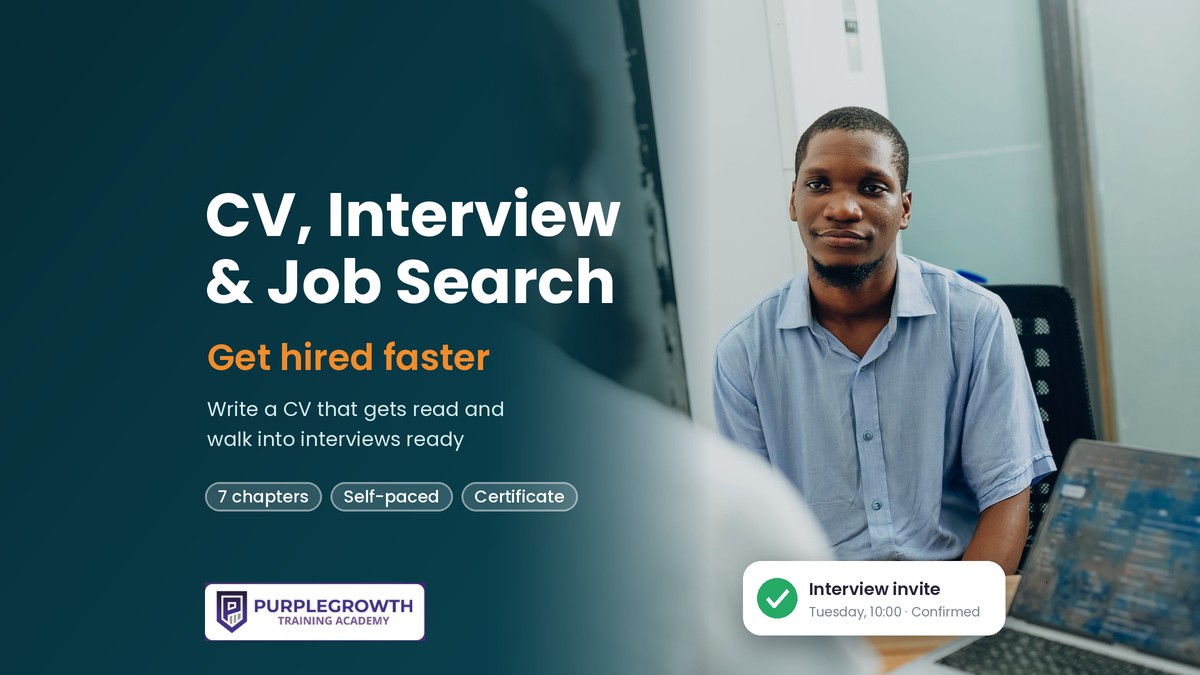
CV, Interview & Job Search Skills
Build a strong CV with little or no experience, read job adverts properly, write applications and prepare for interviews. You finish with a CV saved as a PDF on your phone, ready to send.
Other courses people take after matric include Digital Literacy and Microsoft Skills, Excel and Data Capturing and the Cashier course. Each is R199 once-off, done on your phone at your own pace.
9Your after-matric checklist
- Get your results and check every mark.
- Decide quickly whether to apply for a re-mark or re-check.
- If you need to rewrite, register for the free Second Chance programme and the May/June exam.
- Contact universities and public TVET colleges about late or available spaces.
- Register on SAYouth.mobi and look for YES placements and learnerships.
- Update your CV and get it ready as a PDF on your phone.
- Build one practical skill employers ask for.
10Frequently asked questions
When will the 2026 matric results be released?
They are expected in January 2027. The Department of Basic Education hasn’t confirmed the date yet. Last year, results were announced on 12 January and students could get them from 13 January.
What can I do if I failed matric?
You can apply for a re-mark or re-check if you think a mark is wrong, and you can rewrite subjects in the May/June exams through the free Second Chance Matric Programme. Meanwhile, register on SAYouth.mobi and build job skills.
Is the Second Chance Matric Programme free?
Yes. The Department of Basic Education says the programme is free and does not endorse any paid services.
How much does a matric re-mark cost?
Last year a re-mark cost R120 per subject and a re-check R30. The fees for the 2026 results will be announced in January 2027.
What is the difference between a Bachelor’s, Diploma and Higher Certificate pass?
They set the level of study you can apply for. A Bachelor’s pass needs 50% in four high-credit subjects, a Diploma pass 40% in three, and a Higher Certificate pass 40% in two, plus 40% in your Home Language. Institutions add their own requirements.
Can I still apply to university or college after getting my results?
Some universities and colleges accept late or space-available applications after results. Check their websites, look at the department’s Central Application Service, and contact your nearest public TVET college.
Is it too late to apply for NSFAS for 2027?
NSFAS applications for 2027 closed on 31 October 2026, and NSFAS said there would be no extensions. Funding results are expected in December 2026.
What jobs can I get after matric in South Africa?
Call centre and sales roles are the main jobs that need little experience, though competition is high. Retail, cashier, warehouse and petrol attendant posts are also common, but many ask for matric.
Is a learnership the same as a short course?
No. A learnership combines workplace experience with structured learning, usually for about a year, and pays an allowance. A short online course builds a specific skill and gives you a certificate of completion.
Get job-ready on your phone
Build a CV that gets read and prepare for interviews, at your own pace. Finish with a certificate of completion for your CV.
Start CV, Interview & Job Search Skills for R199




Responses