
How to Become an IT Support Technician in South Africa (2026 Guide)

IT support is one of the few IT careers you can start without a degree. This guide explains what helpdesk and IT support staff do, what they earn in South Africa in 2026, what employers ask for, which certifications are worth it and what they cost, and the free ways in.
Key takeaways
- Entry-level IT support jobs pay about R6,000 to R12,000 a month. The average for IT support technicians is about R15,300 a month (PayScale, April 2026).
- Most junior ads ask for matric. CompTIA A+ and N+ are a plus, not a must.
- Windows, Microsoft 365 and basic networking are the skills employers mention most.
- You can build experience by fixing devices for family, friends and small businesses.
- Free routes exist, including YES placements and free Microsoft Learn training.
In this guide
1What IT support and helpdesk staff actually do
IT support (also called helpdesk, service desk or desktop support) is the team people call when their computer, email, printer or Wi-Fi stops working. It is one of the most common ways into an IT career in South Africa, because companies of every size need it and you don’t need a degree to start.
From current South African job ads, a junior technician’s day usually includes:
- Logging, tracking and escalating support tickets
- First-line support by phone, remotely and on site
- Setting up laptops, desktops and printers, and installing Windows and standard software
- Managing user accounts and permissions (Microsoft 365, Active Directory, Exchange)
- Troubleshooting hardware, software and network problems
- Backups and updates, and preparing equipment for new staff
- Passing harder problems to senior technicians
The skill that matters most is calm, logical troubleshooting: asking the right questions, testing one thing at a time and explaining the fix in plain language.
2IT support salaries in South Africa (2026)
Pay starts modestly and grows quickly once you have experience and one or two certifications. These are the latest figures from salary sites, with the number of salaries behind each one:
| Role | Typical pay | Source |
|---|---|---|
| Help desk technician, entry level | About R95,900 a year (about R8,000 a month) | PayScale, 9 salaries |
| IT support technician, entry level | About R98,300 a year (about R8,200 a month) | PayScale, 9 salaries |
| Technical support | R13,990 a month on average | Indeed, 48 salaries, Aug 2026 |
| IT support technician, all levels | R184,008 a year on average (about R15,300 a month) | PayScale, 209 profiles, Apr 2026 |
| IT support technician, mid-career | R224,005 a year (about R18,700 a month) | PayScale, 84 profiles |
| Desktop support technician | R237,010 a year on average | PayScale, 94 profiles, Jun 2026 |
| Systems administrator (next step up) | R271,569 a year on average | PayScale, 304 profiles, Jul 2026 |
Real junior job ads in 2026 show the same picture: Sautech advertised a junior IT technician post at R6,000 to R10,000 a month, and Ligpos a junior support technician post at R7,000 to R12,000 a month.
3What South African employers ask for
We looked at current junior IT support ads on Careers24. The patterns:
4How to become an IT support technician: step by step
5Certifications and what they cost
| Option | Cost | Notes |
|---|---|---|
| CompTIA A+ | About R2,403 per exam, about R4,806 for both (local reseller price via iFundi, Oct 2026) | Two exams, Core 1 and Core 2 (CompTIA). The best-known entry certification in job ads. |
| Microsoft Learn | Free to study (Microsoft) | Free online training for Windows, Microsoft 365 and Azure. Exams are paid and priced per country. |
| Google IT Support Certificate | $49 a month in the US after a 7-day trial. Google says some countries pay less (Google) | Online through Coursera, typically 3 to 6 months. |
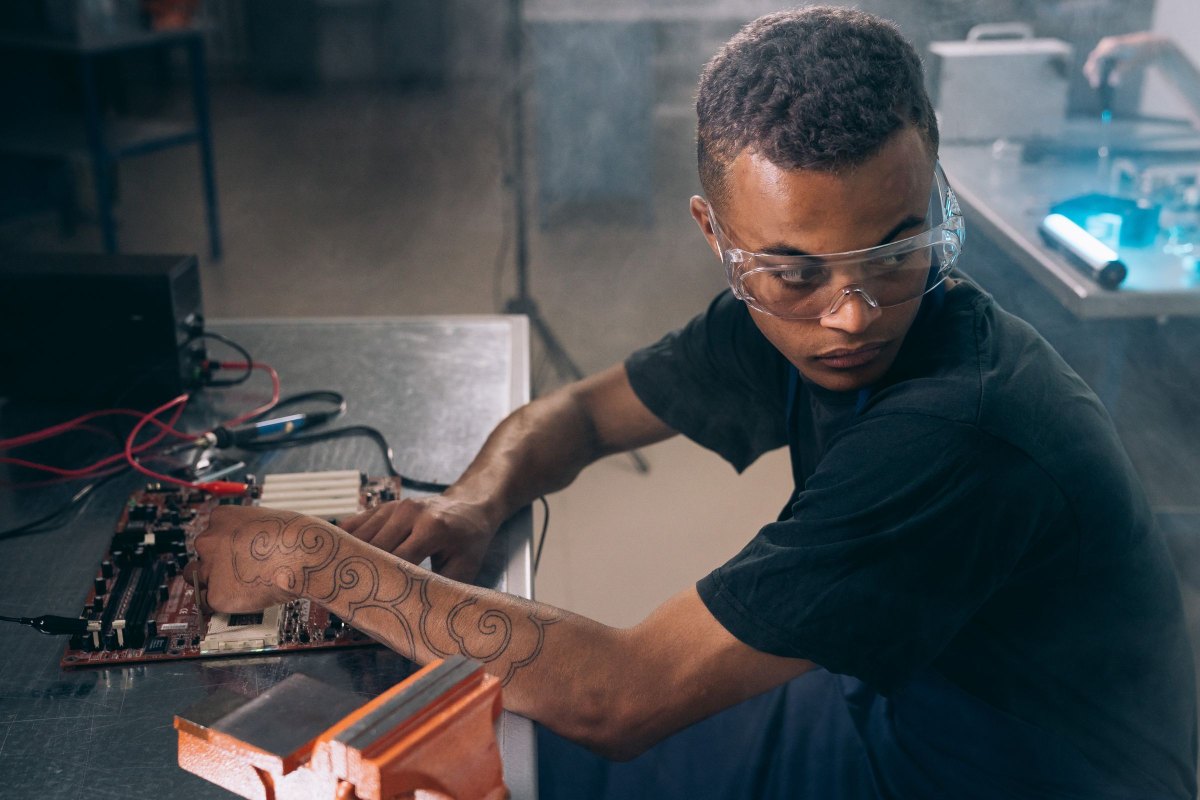
IT Support & Helpdesk
Learn how computers, networks and the internet work, the professional seven-step troubleshooting method, how to log and escalate tickets, and how to keep users safe from phishing. Then build experience and earn on the side.
6Free ways into an IT job
If you can’t afford courses yet, these routes cost nothing:
- YES (Youth Employment Service). 12-month work placements for unemployed Black South African citizens aged 18 to 34. Your education level doesn’t matter. Register at yes4youth.co.za (Vuk’uzenzele).
- Free online training. Microsoft Learn is free, and free YouTube channels cover A+ topics.
- Company internships and learnerships. Banks, retailers and IT companies advertise IT internships on their own careers pages. Only apply through official websites.
- Volunteer. Offer to look after computers at a school, church or NGO. It is real experience you can put on your CV.
7Frequently asked questions
How much does an IT technician earn in South Africa per month?
Entry-level IT support and helpdesk staff typically earn about R6,000 to R12,000 a month in their first job. The PayScale average for IT support technicians at all levels is R184,008 a year, about R15,300 a month (April 2026).
Can I get into IT without matric?
It is harder, but possible. Most ads ask for matric, but some entry-level posts don’t list it. Practical skills, a certification like CompTIA A+ and real experience fixing devices help make up for it.
Is CompTIA A+ recognised in South Africa?
Yes. CompTIA A+ is one of the certifications most often listed in South African IT support job ads, usually as “advantageous” for junior posts.
How much does CompTIA A+ cost in South Africa?
A+ has two exams. Local resellers charge about R2,403 per exam, about R4,806 for both (October 2026). Prices change with the exchange rate.
Do I need a degree to work in IT support?
No. IT support is one of the IT jobs you can start without a degree. Employers care more about troubleshooting skills, Microsoft 365 knowledge, communication and certifications.
How long does it take to become job-ready?
With focused study and practice, many people are ready to apply for helpdesk jobs within a few months. A certification like A+ typically takes longer.
What is the difference between IT support and software development?
IT support keeps computers, accounts and networks working for users. Software development is writing code to build applications. Many people start in support and later move into networking, cloud, security or development.
Get ready for your first IT job
Learn the troubleshooting, helpdesk and security skills junior IT ads ask for, on your phone, at your own pace. Finish with a certificate for your CV.
Start IT Support & Helpdesk for R199





Responses